MARKET SEGMENTS DIVISION–HEALTH CLUBS AND GYMS
(February 2023)
The Health Clubs and Gyms Program is an enhancement of the Commercial Package Policy available to Health Club operators. This section discusses items specific to the Health Clubs and Gyms Program, including eligibility, supplemental schedule, MS HC–Health Clubs and Gyms, and the special endorsement developed just for this program. In addition, there is a section on underwriting and rating.
Related Article: ISO Market Segment Overview
This article is based on the 07 13 edition of this program. Changes from the prior edition are in bold print.
ELIGIBILITY
The only eligible classifications for this program are Health or Exercise Facilities- commercially operated – 44315 and Health or Exercise Clubs – 44311.
There is no requirement that these be the only classes. There are no operations that are automatically ineligible, according to ISO. However, the insurance carriers providing the coverage will have their own acceptability guidelines.
MS HC DS–HEALTH CLUBS AND GYMS SUPPLEMENTAL SCHEDULE
This article section discusses the specific information that must appear on a Supplemental Schedule for the Health Clubs and Gyms Program.
Changes in Limits
This section's only purpose is to increase insurance limits. If no limit is entered, the limits shown in the MS HC 01 apply. Any limit changes are effective on a per location basis. This allows protection for one or two locations to be increased without affecting the remaining locations.
A list of specific coverages appears in this section. Space is also available for entering a coverage to be defined and a limit of insurance for it. The coverages are:
- Money and Securities
o On-premises
o Off-premises
- Computer Fraud
- Money Orders and Counterfeit Money
- Forgery or Alteration
- Outdoor Signs
- Employee Dishonesty
- Lock Replacement
- Personal Effects and Property of Others
- Valuable Papers & Records
- Other (Specify)
Note: According to the coverage form, whatever limit is entered is a replacement (not an additional) limit. If an insured wants $5,000 in coverage and the existing limit is $2,500, a limit of $5,000 must simply be entered on the schedule to get the desired level of coverage.
Hired and Non-Owned Auto Liability Insurance
If coverage is desired, endorsement MS HC 02–Health Clubs And Gyms-Hired Auto and Non-owned Auto Liability Insurance must be attached. The limits can be entered on this Supplemental Schedule or on the schedule that is included on the MS HC 02 form. Separate insurance limits apply for these two coverages.
Loss or Damage to Guests’ Autos Section
A check must be entered beside the Legal Liability coverage and MS HC 03–Loss or Damage to Guests’ Autos (Legal Liability) attached for coverage to apply. For each location where coverage is desired, the following entries must be made:
- The event limit of insurance
- The per customer's auto deductible for loss by theft, vandalism or mischief
- The maximum deductible per occurrence for loss by theft, vandalism or mischief
- The per customer’s auto for deductible for loss by collision
Refreshment Stands – Spoilage and Food Contamination Coverage
MS HC 07 provides several coverages specific to a refreshment stand. The endorsement has no schedule, so coverage and limits in excess of the values in the endorsement must be entered here. A check can be made by selecting the coverage without entering a limit because there is a default limit in the endorsement.
The coverages that can be selected and limits changed are:
- Spoilage
- Food Contamination
o Extra Expense
o Business Income
o Additional Advertising Expenses
- Business Income and Extra Expense From Dependent Properties
Forms Applicable
The final section of the Supplemental Schedule allows for a listing of specific endorsements by premises.
MS HC 01–HEALTH CLUBS AND GYMS ANALYSIS
The opening paragraph of the Health Clubs And Gyms endorsement says that it modifies the following coverage and causes of loss forms:
- CP 00 10-Building and Personal Property Coverage Form
- CP 10 30-Causes of Loss-Special Form
- CG 00 01 or CG 00 02–Commercial General Liability Coverage Form
The Health Clubs and Gyms endorsement is not a complete coverage part. It must be attached to a package containing all three of the above named forms. If all three forms are not a part of the policy, the Health Clubs and Gyms Program endorsement does not apply.
When the Health Clubs And Gyms endorsement is attached, all of the underlying terms, conditions, and provisions of the above three forms apply as they normally would, except as modified by the Health Clubs And Gyms endorsement.
Each of the modifications will be reviewed in the following analysis.
I. Modifications to CP 00 10– Building and Personal Property Coverage Form
A. Additional Coverages Additions
1. Money and Securities
Coverage is
added for direct loss by theft, disappearance, or destruction of money and
securities. This additional protection is effective if a loss occurs at a covered premises, a bank or savings
institution, living quarters of the named insured, partner or employee and
while the property is in transit between any of these locations. Coverage at
employee living quarters applies only if that employee was given the covered
property to use or hold on behalf of the named insured. The automatic amount of
$10,000 applies when the covered property is either in the described premises
or at a bank while the $5,000 applies when the covered property is anywhere
else. Either or both limits can be increased by an entry on the Supplemental
Schedule.
The
following three types of loss are excluded:
·
Losses that result from errors or omissions in
accounting or arithmetic.
· Losses that occur because the property was voluntarily given out in an exchange or purchase.
· Any loss of covered property that is contained within any money-operated device (such as a vending machine). This exclusion does not apply if the device has a continuous reading instrument that records all amounts that are deposited or stored in the device that is covered.
Occurrence is defined under this segment as any loss that involves a single act or a series of related acts by one or more individuals. The named insured is required to keep records of all money and securities to verify any loss.
|
Example: Sophie closes up late and takes the receipts with her to verify and to deposit the next day at the bank. She hides the cash in her fireplace for safekeeping. The next day when she gets ready to head to the bank, she searches but cannot find the cash where she left it. Nothing else is missing in the house, and she cannot explain how it disappeared. The loss is covered unless evidence can show that Sophie is the thief. |
2. Fire Extinguishing Systems Expense
Up to $5,000 is available in any one occurrence to pay the cost of recharging or replacing fire extinguishing equipment and systems. Coverage applies only if the discharge is within 100 feet of a described building or within 100 feet of the premises. The greater of the two distances is used to determine if coverage applies.
In addition, if the covered property is damaged due to an accidental discharge, it is covered but subject to the same $5,000 limit. The good news is that there is no deductible applicable.
There is no
coverage if the system is discharged during testing or installation.
3. Reward Payment
Reward payments are available to assist in solving crimes that result in covered losses. Two categories of awards are provided.
In the first category, up to $5,000 is available for information that leads to the arrest and conviction of any party who commits a crime that results in a covered property loss. The $5,000 is the maximum available. However, the reward payment will be for no more than the least of the actual cash value of the damaged property at the time of the loss, the amount it takes to repair or replace the property, or the settlement value developed based on the policy’s conditions.
The second category of reward payment applies to the return of stolen property and is also for $5,000.
The reward
amounts shown are the most that are available for any one occurrence of loss.
Should more than one person provide information or return stolen property, it
is the first to do so voluntarily that will collect the award.
Who is eligible to collect the award? Only one person can receive the reward. The first person, as determined by law enforcement, who voluntarily provides information that leads to a conviction or leads to the stolen property will receive the reward. However, that person cannot be any of the following:
- The named insured
- Family members of the named insured
- Employees
- Family members of employees
- Employees of law enforcement agencies
- Employees of a business engaged in property protection
- Any person having custody of the covered property at the time the theft was committed
- Any person involved in the crime
The reward is not paid until there is a conviction or the property is returned.
4. Computer Fraud
If a fraudulent transfer of property, money, or securities is made by using a computer, there is coverage for up to $25,000. The property, money, or securities must be transferred from inside an insured premises or bank to a person or place outside the insured premises or bank. The coverage territory is worldwide. A loss is covered only if it begins during the policy period.
This limit can
be increased on the Supplemental Schedule.
5. Money Orders and Counterfeit Money
If the insured, in good faith, accepts any money orders that are not paid or counterfeit money in exchange for services, merchandise or money, there is coverage in the amount of up to $1,500. The limit can be increased in the Supplemental Schedule.
Money orders
must be issued by a post office, express company, or bank.
6. Forgery or Alteration
Loss that occurs because of the forgery or alteration of checks, drafts, promissory notes, bills of exchange or any similar instruments is covered. Such instruments must be issued by the named insured, the named insured’s agent, or someone impersonating either of these parties. There is no coverage if the loss is for instruments received by the named insured from other sources.
If the named insured realizes that an instrument has been forged or altered and refuses to honor it, this coverage also pays related and reasonable legal expenses that may ensue. The named insured is given written permission to go ahead with their own defense, and the named insured will be reimbursed for those expenses.
The $2,500 limit is the most that will be paid under this coverage for a single loss. The amount may be exhausted by the loss itself, the defense of a suit or a combination. The limit can be increased on the Supplemental Schedule.
7. Outdoor Signs
Direct damage to outdoor signs owned or under the control of the named insured is covered. This coverage supersedes any other coverage provided for signs elsewhere in the policy.
The any one-occurrence limit is $5,000. This limit can be increased in the declarations. The Special Causes of Loss form is amended later in this endorsement to modify the causes of loss that apply.
|
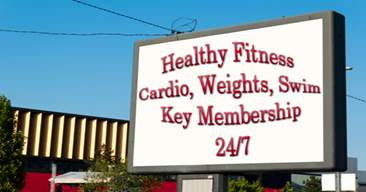
Example: Healthy Fitness has a large
sign that can be seen from the interstate. It is valued at $10,000, so the
limit on the supplemental schedule was increased to $10,000. An earthquake
occurs, knocking it to the ground. The sign is covered for its full value
because of this coverage and the increased limit. |
|
8.
Employee Dishonesty
Coverage is provided for employee dishonesty that results in the loss of money, securities, or business personal property. The employee may be working alone in committing the dishonest act(s), or the employee may collude with other persons. However, if any of those other persons include the named insured, partner, member, or manager of the named insured, there is no coverage.
There is no coverage for indirect loss related to employee dishonesty, such as a business income loss, any costs to establish the existence or the amount of a loss or any legal liabilities. Related legal expenses are also ineligible for coverage.
No protection exists when the only proof a loss occurred or verification of the amount of the loss is a shortage as a result of an inventory computation or a profit and loss statement. In other words, there must be tangible evidence that a dishonest act occurred, and there must be a way to calculate the amount of that loss accurately.
A special exclusion applies to employees who have committed prior acts of dishonesty. If the named insured, any partner, trustee, member, manager, officer, or director of the named insured discovers that an employee was previously involved in a dishonest act, there is no coverage for any acts of that employee. It doesn’t matter whether the incident occurred before or after the named insured hired the employee—coverage ceases. The termination takes effect the moment the employee's prior act is discovered. There are no exceptions to this exclusion unless the insurer is willing to write a manuscript endorsement to document an exception.
The $5,000 limit in the form may be increased on the Supplemental Schedule. This limit is the total amount available to respond to a single occurrence. The limit of insurance is not cumulative from year to year, so the limit shown is the maximum that will be paid for any one occurrence of a dishonest act or event, regardless of how many years the policy has been in force or how much premium has been paid.
The dishonest
act or event must happen during the policy period to be covered.
Possible
Exclusion Ambiguity
There is an exclusion that may be confusing. It states that loss or damage due to a dishonest act performed by the named insured and any partner, member, officer, manager, director, or trustee is ineligible for coverage. Up to this point, the exclusion is very similar to exclusions in the Commercial Crime Form. However, the exclusion also bars loss for dishonest or criminal acts by authorized representatives and by “anyone to whom the named insured has entrusted property.” This part of the exclusion may be problematic. Doesn’t the named insured entrust items to employees as part of their duties? Aren’t employees authorized representatives? This wording is not used in the Commercial Crime policy and could cause confusion. For an example of how this issue was treated under another line of coverage.
Related Court
Case: "Employee Dishonesty Exclusion Superseded Liability for
Negligent Supervision"
9. Ordinance or Law – Equipment Coverage
(07 13 change)
This coverage was inspired by the dynamism surrounding environmental laws. Federal, state and community standards may require changes in equipment when it is replaced for any reason. If so, this coverage pays for the upgrade but only if the equipment’s valuation is on replacement cost and the item is being replaced due to a covered cause of loss.
If refrigeration equipment is damaged, this
coverage pays three additional costs:
- Mandatory refrigeration reclamation
- Retrofitting of CFC-type equipment so
that it uses non-CPC refrigerant to meet Clean Air Act requirements.
- Recharge of the system with non-CFC
refrigerant.
The ordinance coverage is paid only if the equipment is actually repaired or replaced. The total payment cannot exceed the limit of insurance on the declarations.
This coverage does not pay for costs related to pollutant enforcement. In addition, if the named insured had an order to comply with an ordinance or law prior to the loss and failed to comply, there will be no payment for that previously neglected upgrade under this Additional Coverage.
Coinsurance does
not apply to this Additional Coverage.
10. Lock Replacement
If keys for the locks on the premises are stolen or lost, the insurance company will pay up to $5,000 to replace or repair the locks, subject to a $100 per occurrence deductible.
Note: The keys are not required to be on premises when they are stolen.
|
Example:
Jack, the evening manager at Health and Fitness Plus, does not show up
for work for three days and is fired. Kevin requests that Jack come and pick up his personal items and
return his uniform shirt and any other Health and Fitness Plus items. Jack
does not return, but Kevin notices that the master key for the operation and
the one for the guest lockers is missing. When Jack still does not respond,
Kevin considers the keys stolen and has all locks and keys replaced. The cost
is covered by up to $5,000. |
11.
Artificially Generated Electrical Current
This coverage is applicable only to computers. When an artificially generated electrical current damages or destroys computers, the insurance company will pay, but only if either of the following occurs:
- An event that causes the loss or damage takes place within 1000 feet of a described premises
- Power surge, interruption of power, blackout, or brownout is due to an occurrence that took place within 1000 feet of the premises
Any loss payment is subject to the deductibles in the policy and the limit on the Declarations that applies to this (computer) equipment. Because there is no limit, the coverage is subject to the policy limit.
B. Coverage Extensions changes
1. Personal
Effects and Property of Others
The limit is increased the limit from $2,500 to $5,000.
The $5,000 limit can be increased on the Supplemental Schedule.
2. Valuable Papers and Records (Other than
Electronic Data)
The valuable papers and records coverage extension is increased from $2,500 to $10,000, for on-premises loss or damage. It also adds coverage when the valuable papers and records are off premises but only for $5,000. These limits can be increased for an additional premium.
Coverage is expanded to include not only the cost to replace or restore the lost information but also any physical loss or damage to the valuable papers and records owned by or in the named insured’s care, custody or control. The coverage extends to the cost of blank material and the labor necessary to transcribe any available records.
The covered cause of loss is more restricted and must be due to a specified cause of loss as defined in the CP 10 30–Causes of Loss - Special Form or due to collapse. Property that is held as samples or that has been sold and is waiting to be delivered is not covered. Any property that is being stored off premises is also not covered.
Note: If higher limits are needed, consider using one of the following forms because of causes of loss and coverage designed just for this exposure.
Related Articles:
AAIS Valuable Papers and Records Coverage Form
ISO
Valuable Papers and Records Coverage Form
3. Outdoor Property
The Health Clubs and Gyms Program provides coverage for outdoor property for the following Causes of Loss:
- Fire
- Lightning
- Explosion
- Riot or civil commotion
- Aircraft
The enhanced Health Club and Gyms Program applies limits based on the type of outdoor property.
- Fences and retaining walls not part of the building are covered for $15,000 in any one occurrence.
- Outdoor radio and television, satellite or other antennas are covered for up to $3,000 in a single occurrence. The coverage extends to masts, towers and lead-in and support wiring that are part of the covered items.
- Trees, shrubs, and plants are covered for up to $5,000 for any one occurrence, but there is a maximum of $1,000 for any one tree, shrub, or plant. Trees, shrubs, and plants that are considered stock or that are part of a vegetated roof are not part of this extension because they are covered as personal property. The $5,000 limit must also cover any debris removal associated with the loss.
- The expense to remove property of
others consisting of trees, shrubs, and plants debris is covered under this
item. The property of others cannot belong to the owner of the building
when the named insured is a tenant.
Note: No limit is mentioned with the
expense to remove property of others item, although there is a reference to the terms and conditions of the rest
of extension. There could be an ambiguity as to what limit, if any, applies.
6. Accounts Receivable
The limit of insurance for the business personal property may be extended to include direct physical loss or damage caused by a covered cause of loss to accounts receivable for:
- The amounts an insured is owed from customers but is unable to collect
- Interest charges on loans the insured has had to obtain to offset collections while the insurer was settling the claims payment process
- Any additional collection expenses that were made necessary by the loss or damage
- Other reasonable expenses incurred to reestablish accounts receivable records
The amount available is $10,000 for on-premises loss or damage and up to $1,500 for off-premises loss.
II. Modification to CP 10 30–Causes of Loss-Special Form
Several exclusions and limitations found in the Causes of Loss—Special Form are modified for some of the additional coverages and coverage extensions. The modifications are as follows:
A. Ordinance or Law
In order to not confuse coverages, the Ordinance or Law exclusion in the Special Cause of Loss form applies to the entire policy except for the Ordinance or Law – Equipment Coverage Additional Coverage that was added earlier in this endorsement.
B. Mechanical Breakdown
The mechanical breakdown exclusion does not apply to computers.
C. Dampness, Dryness, Changes In Temperature, Marring Or Scratching
The only change in the dampness, dryness, and changes in temperature, marring or scratching exclusion subparts is that computer damage is covered if it results from the failure of an air conditioning system. However, the air conditioning failure must be a direct result of damage caused by a covered cause of loss.
D. Additional Exclusions for Computer Coverage Only:
1. The
following exclusions apply to computer coverage. Loss or damage due to any of
the following is excluded regardless of other concurrently or sequentially
occurring causes of loss.
Note: The reason these extra exclusions are needed is that MS HC 01 includes coverage for mechanical breakdown of computers that is not provided by the CP 10 30.
a. Errors or Omission
There is no coverage for damage or loss caused by or resulting from human errors or omissions in processing, recording, or storing information on computers. (Resulting fire or explosion is covered if caused by a covered peril.)
b. Electrical Disturbance
There is no coverage for damage caused by electronic or magnetic injury, disturbance, or erasure of electronic recordings unless it is a result of a direct loss or damage caused by lightning.
c. Computer-Related Losses
There is no coverage for any loss or damage that is caused by or results from the failure, malfunction, or inadequacy of any of the following (regardless of who owns the property) because they cannot correctly recognize, process, distinguish, interpret, or accept dates or times:
· Micro-processors and any other computer hardware
· Software
· Operating system software
· Networks used by computers
· Equipment that is computer related or electronic and associated components
· Any other products that depend on the items listed immediately above in any manner.
d. Computer
Advice or Consultation
Any of the following provided by the named insured or for the named insured is not covered when used to determine, test, or rectify potential or actual problems described in exclusion c. above.
· Advice
· Consultation
· Design
· Evaluation
· Inspection
· Maintenance
· Repair
· Replacement
· Supervision
2. When Electrical Disturbance, Computer-related Losses and Computer Advice or Consultation excluded above result in a specified cause of loss or elevator collision, that resultant loss is covered. However, there is no payment to repair, replace, or modify any item listed in exclusion c. above.
The damage from an elevator collision must involve the elevator experiencing a mechanical breakdown.
E. Employee Dishonesty
Most of the exclusions in the Cause of Loss–Special Form do not apply to the Employee Dishonesty Coverage provided in this endorsement. The only applicable exclusions are Governmental Action, Nuclear Hazard, War and Military Action and the specific exclusions discussed in the Employee Dishonesty Additional Coverage.
F. Outdoor Signs
Most of the exclusions in the Special Cause of Loss Form do not apply to the Outdoor Sign Coverage provided in this endorsement. The only applicable exclusions are Governmental Action, Nuclear Hazard, War, Military Action, Wear and Tear, Rust and Mechanical Breakdown.
Related Article: Basic, Broad and Special Causes of Loss Forms Analysis
G. Valuable Papers and Records and Accounts Receivable
The only exclusions in Paragraph B. that apply to Valuable Papers and Records and Accounts Receivable are:
· Governmental action
· Nuclear hazard
· War and military action
· Computer-related losses
· Computer advice or consultation
· Continuous or repeated seepage or leakage of water—14 days or more
· Water, other liquids, powder or molten material that leak or flow from plumbing, heating, air conditioning or other equipment caused by or resulting from freezing
· The anti-concurrent causation exclusions that are part of B.3.
Note: This item is very ambiguous because of the difference between the two coverages. Valuable Papers and Records coverage applies only for specified causes of loss and collapse, while accounts receivable coverage is subject to the CP 10 30 causes of loss. Combining the two coverages under this same modification would suggest that the two are covered for the same causes of loss when they are not.
H. Accounts Receivables
The following exclusions apply in addition to the exclusions described in G. above:
- Any loss involving alteration, falsification, concealment, or destruction of accounts receivable records if these actions were meant to conceal another action such as giving, taking or withholding money, securities, or other property.
- Any loss due to errors or omission in a covered operation's bookkeeping, accounting or billing functions.
- Any loss that is found only due to an audit or inventory. There must be some other outside evidence.
III. Changes to the Commercial General Liability Coverage Part
A. Abuse and Molestation Exclusion Added
The exact
wording from CG 21 46–Abuse and Molestation Exclusion is added. Therefore, coverage for bodily injury, personal and
advertising injury and property damage due to abuse or molestation is excluded.
The exclusion applies if the abuse actually occurred or was merely threatened.
It applies when such abuse is caused by anyone and the abuse was of a person under the care, custody, or control
of any insured.
Note: It is important to note that person
sustaining injury or damage could be under ANY insured’s control, not just the
named insured.
The negligent employment, investigation, supervision, or retention of a person whose conduct is excluded above is also excluded. Negligent reporting, including total failure to report, of such a person is another part of this exclusion.
B. Medical Payments Expansion
The Athletic Activities exclusion in the Medical Payments coverage is eliminated. This means that the Medical Payment coverage is provided for those engaged in athletic activities.
|
|
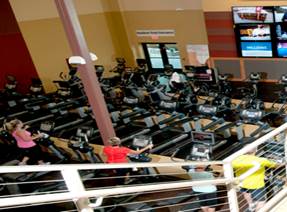
Example: Grace is running on the treadmill. She momentarily looks over to see if Greg is watching her. She loses balance, falls off the treadmill, and hits her head. Healthy Fitness’s manager immediately calls 911 to take Grace to the hospital for an examination for injuries. Grace’s expenses for transport and treatment are covered up to the Medical Payments limit because of this expansion. |
IV. Definitions
The following definitions are added to the Commercial Package Policy via the Health Clubs And Gyms Program endorsement as follows:
Computer is a programmable electronic device used to work with data. While the definition does apply to peripheral equipment and to related air conditioning and fire suppression systems, it doesn’t apply to data or media.
Counterfeit money is a money imitation meant to deceive.
Employee, as used in the Money and Securities and Employee Dishonesty coverages provided in this endorsement, is expanded beyond the full-time employee of a business. There are seven different categories that qualify as employees:
a. An actual person (not a corporation) who is paid by the named insured and is under the control of the named insured with respect to performing his or her duties. The person remains an employee for 30 days after termination, but only if termination is not related to dishonest actions.
b. A person who is a substitute for an employee or is hired for short temporary work is considered an employee while under the control of the named insured except when caring for property off-premises.
c. A person leased to the named insured that is not a person described in a. or b. above. There must be a contract and a labor-leasing firm involved.
d. A consultant for the named insured but only if that consultant was formerly an employee, director, partner, member, trustee, or manager.
e. A guest student or intern but only while acting as a student or providing services for the named insured. There is no coverage for loss of property off premises.
f. Any employee of an entity that merged with the named insured or was acquired by it prior to the policy effective date.
g. Managers, directors or trustees when acting as employees or while on a task-oriented board.
An employee
does not include independent contractors or similar type individuals unless
specifically described in the list above.
Forgery is when one person signs another person’s name with the intent to deceive. It does not include an unauthorized signing by a person of his or her own name.
Manager is any director in a limited liability company. This applies to only Employee Dishonesty coverage.
Member is an owner of a limited
liability company. This applies to only Employee Dishonesty coverage.
Money includes currency, coins, and banknotes with a face value and in current circulation. Money orders, travelers’ checks, and similar items are included, but only if they are held for sale to the public.
Occurrence,
as defined here, applies only to the Crime portions of this form,
and the meaning varies by the type of coverage. Under Money and Securities
coverage, it means all loss that involves one or more related acts by one or
more persons. Under Money Order, Counterfeit Money and Computer Fraud, it means either one or more related acts
or events by one or more persons or one or more related acts or events not
involving any person. Under Forgery or Alteration coverage, it means all losses
involving one or more instruments caused by any person or in which that person
was involved. Under Employee Dishonesty, it means all losses that result from a
single act or series of acts caused by one or more employees.
Securities are evidence of debt such as stock certificates, bonds, contracts, tokens, stamps, credit card evidence that can be used to collect from the credit card company and other items that represent money but are not money.
ENDORSEMENTS
The forms and endorsements developed for the Market Segments series of programs carry the designation “MS.”
The following endorsements are available to tailor the coverage provided under this program.
MS HC 02–Health Clubs and Gyms—Hired Auto and Non-Owned Auto Liability Insurance
This endorsement amends the General Liability Coverage Part to provide coverage on a basis similar to commercial auto coverage. Hired auto coverage applies to bodily injury and property damage that arises from the maintenance or use of a hired auto by the named insured or any employee of the named insured. Non-Owned Auto Liability applies to bodily injury or property damage that arises from any person using a non-owned auto in the course of the named insured’s business.
Note: Non-owned coverage is designed to protect the named insured, not the owner or driver of the vehicle.
MS HC 03–Health Clubs and Gyms-Loss or Damage to Guests' Autos (Legal Liability Coverage)
This endorsement provides legal liability coverage for damage to guests' autos under the Building and Personal Property Coverage. It offers protection against direct loss of or damage to guests’ autos and auto equipment while on the covered premises.
It pays only for damage that occurs on the covered premises when the insured bears legal responsibility for the damage. The exclusions in the Cause of Loss-Special Form do not apply, but the named insured must be legally liable. In addition, there is no coverage for incidents involving:
· Loss or damage from theft or conversion caused by the named insured or any insured
· Liability because the named insured has agreed in writing to accept responsibility for the auto
Because this is legal liability coverage, a list of Supplementary Payments is provided that is in addition to the limit of insurance available under this coverage.
The limit and deductibles are shown on the Supplemental Schedule.
Auto is defined as a land motor vehicle, trailer, or semitrailer.
MS HC 04–Health Clubs and Gyms-Employees’ Tools Coverage
Coverage is provided for loss or damage to employees’ tools while on the covered premises and used as part of the health club and gym operations. A limit must be entered in the endorsement, but the loss for any one tool is capped at $100, and all tools for a single employee is capped at $500. A deductible of $100 applies per occurrence.
MS HC 05–Health Clubs and Gyms-Professional Liability
Professional coverage is provided for the health club and its professional employees but only for activities described in the endorsement schedule. There is no separate limit for this coverage, so it is part of the CGL occurrence limit subject to the products/completed operations aggregate. It is important to closely compare this endorsement to any specific professional coverage before any coverage change recommendation is made.
MS HC 06–Health Clubs and Gyms-Abuse and Molestation
The abuse and molestation exclusion in the MS HC 01 is deleted and replaced by this endorsement which provides coverage for the club but not the perpetrator, provided the club took appropriate actions and would not have expected such actions to take place. The endorsement has its own occurrence and aggregate limits schedule.
MS HC 07–Health Clubs and Gyms-Refreshment Stands
This is a mini-market segment endorsement. Brands and Labels, Spoilage, Business Income From Dependent Properties, Food Contamination Extra Expenses and Services Errors and Omissions Coverages are added. Cause of Loss changes are made, and new definitions are added. Default limits are provided in the form, but increases must be made on the Supplemental Schedule.
MS HC 08–Health Clubs and Gyms-Merchandise Withdrawal Expenses Coverage
A limit of $25,000 is provided for expenses the insured incurs because of certain types of product recalls.
MS HC 09–Health Clubs and Gyms-Exclusion-Athletic or Sports Participants-With Scheduled Exceptions
This endorsement eliminates liability coverage for any one practicing or participating (even coaches and other facilitators) in any sports event or exhibition that is not scheduled on this endorsement.
MS HC 10–Health Clubs and Gyms-Exclusion-Medical Payments
This endorsement excludes medical payments coverage for any activity scheduled on the endorsement. First aid coverage will apply, though. This is very similar to CG 21 35.
MS HC 11–Health Clubs and Gyms-Exclusion-Medical/Spa Facilities and Services
This endorsement applies when the club is affiliated in some way with a healthcare facility. It excludes coverage for any type of medical, therapeutic, and other types of personal grooming procedures. There is also no coverage if the claim results from the supervision, hiring, monitoring and similar employer related-functions.
UNDERWRITING CONSIDERATIONS
Any program offered by an individual insurer will have eligibility guidelines and criteria set by that insurer. If the program is generic, as in the case of ISO’s Market Segments Program, it normally has its own set of qualifying criteria. The two types of eligibility criteria may be similar, but there may also be differences. It is, therefore, important for the insurance professional to understand that while a potential insured may be acceptable to one insurer under a standard program, it may not necessarily be acceptable to another insurer under the same standard program.
The following review of the underlying and eligibility requirements for the Health Clubs And Gyms Program is for the ISO generic program.
Specific Operations
The only eligible classifications for this program are Health or Exercise Facilities- commercially operated – 44315 and Health or Exercise Clubs – 44311. Other classifications can be on the policy in addition to either of the two eligible ones. There are no ineligible classes.
Exposure identification is the most important part of underwriting this class. The services provided determine the types of exposures to anticipate. Swimming pools and free weights are two areas that must be closely monitored.
The age and health of clientele is also very important because the very young and the very old both should be carefully supervised.
Maintenance is vital. All equipment must be kept in top condition and cleaned regularly.
Privacy and security in locker rooms and showers are vital. The use of cell phones and other devices capable of taking and broadcasting pictures in changing areas should be prohibited. Lockers with keys should be provided for clients’ use.
Appropriate flooring should be provided throughout to prevent slips and falls.
Background checks should be required for all individuals who will be involved with personal training or work with children or the elderly.
Property exposures are often limited but, based on the types of chemicals on hand, could increase. Food service can be problem areas depending on how extensive it is.
COVERAGE ISSUES
Commercial Property Coverages
Many of the issues related to the underwriting of commercial property insurance, such as construction, occupancy, physical characteristics, types of rates and so forth, are discussed in detail under the commercial property section.
Related Article: Commercial Property Program Underwriting Considerations
Commercial General Liability Coverages
Many of the issues related to the underwriting of commercial general liability insurance, such as claims-made versus occurrence coverage, limits, deductibles, endorsements, and so forth, are discussed in detail under the commercial general liability section.
Related Article: Commercial General Liability Policy Underwriting Considerations
Property Enhancements
Several property enhancements are added to the commercial property coverages via the Health Clubs and Gyms endorsement. Any increase in exposure presented by the individual risk hazards and covered by the endorsement enhancements should be identified. Once identified, these hazards and exposures should be evaluated to determine if they are those contemplated by the program, its coverages and rating structure. The exposures and hazards should be addressed if any additional coverages, endorsements, premiums, or other tailoring is necessary. Not all, but the property enhancements with the most significant underwriting concerns, are as follows:
· Accounts receivables are covered up to the stated limits and conditions. The insured should have adequate back-ups and copies stored off-premises in a safe location. The same is true of valuable papers and records.
· Lock Replacement coverage should not be used to encourage poor key handling controls. It is important that key management is controlled not only for this coverage but also to protect business personal property that is stored in those areas from “disappearing.”
· Ordinance or Law coverage extension responds to a legal requirement to replace old equipment that is damaged by a covered source of loss. It is important to be aware of the local environmental regulations regarding the type of refrigerants that are permitted since this could have a significant impact on any loss settlement and also on the future operations of the insured.
· Outdoor Property coverage includes fences, outdoor radio, TV, satellite and antennas, trees, shrubs, and plants. Even with the capping of $1,000 per tree, a significant loss could occur if one of the named perils caused a loss.
·
Outdoor
Signs coverage is $5,000, and the causes of loss are extremely broad. Past
sign damage should be reviewed along with protection for the signs.
Crime and Dishonesty Enhancements
The Health Clubs and Gyms Program endorsements add coverage for money and securities, money orders and counterfeit money, forgery or alteration, employee dishonesty and computer fraud.
The insured should be evaluated for crime protection devices, including if there is any at all, what type of device is used and if it is maintained. The evaluation should include: alarms, locks, lighting, fencing, guards, or other security measures.
Sound hiring procedures, background checks, and internal controls are necessary to avoid and prevent employee dishonesty losses.
Computer access and the methods the insured uses to protect their security should be analyzed. There should be regular changes in passwords and standard procedures to remove employees when they leave.
Procedures and processes should be implemented and reviewed regularly to monitor and prevent the potential for crime and dishonesty losses.
Related Article: Crime Underwriting Considerations
Liability Enhancements
Medical payments coverage is available to those involved in athletic activities, which can cause an increase in liability frequency.
A number of endorsements are available to enhance coverage but should not be added without a careful evaluation of how they may affect an account’s loss severity or frequency. A request for coverage may also provide an indication of a change in the overall exposure.
RATING CONSIDERATIONS
The rating for this product is the same as any other package product. All coverages must be rated in accordance with the Commercial Lines Manual for the specific coverage part.
The basic MS HC 01 is rated based on the number of employees and whether Flood and/or Earthquake are provided in the underlying policies. In addition, there are charges made for any increases in limits, plus charges for all of the endorsements.